
Retirement organizations are navigating one of the most significant periods of transformation in decades. Whether modernizing a public pension administration platform, implementing a new defined contribution recordkeeping solution, or replacing legacy payroll and benefits systems, organizations are reshaping their technology, processes, and operating models to better support retirement services.
Yet despite years of planning, significant financial investment, and experienced implementation teams, organizations across both the public and private sectors continue to experience avoidable challenges during go-live. Payroll disruptions, data reconciliation issues, operational bottlenecks, and service interruptions are rarely the result of a single technology failure.
More often, they occur because organizations make one critical mistake:

As retirement systems become increasingly interconnected and implementation programs grow more complex, executive leaders are faced with one of the most consequential decisions in the transformation lifecycle:



Project Completion Is Not the Same as Readiness
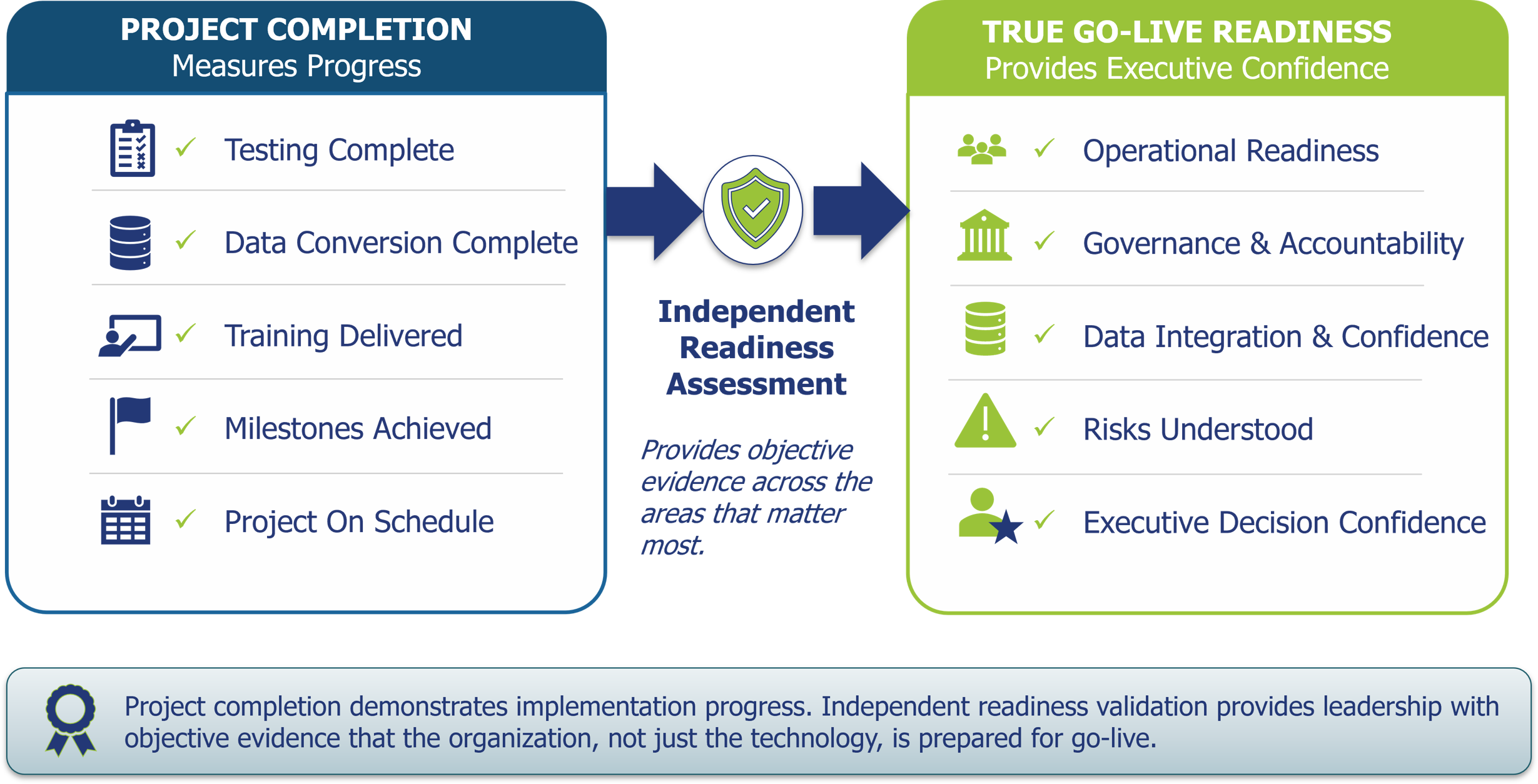
Most implementation programs measure success through traditional project metrics:
- Testing has been completed.
- Data conversion activities are finished.
- Training has been delivered.
- Milestones have been achieved.
- Vendors report they are on schedule.
These milestones are important indicators of implementation progress, but they do not necessarily demonstrate that an organization is prepared to operate successfully on Day One.
A project can be technically complete while significant operational risks remain unresolved. Governance gaps, incomplete operating procedures, integration weaknesses, residual data quality issues, and unclear ownership across vendors often remain hidden until production begins; when the cost and complexity of remediation increase dramatically.
The executive conversation must move beyond project completion.

The distinction between completing a project and being truly prepared for production is often where implementation risk emerges. The illustration below highlights that distinction.
Retirement Modernization Requires Organizaitonal Readiness
Unlike many enterprise technology implementations, retirement modernization affects every aspect of an organization’s ability to fulfill its commitments.
Whether supporting defined benefit pensions, defined contribution plans, hybrid retirement programs, or broader retirement administration services, organizations must ensure that technology, business operations, governance, and people are equally prepared for transition.
True readiness extends well beyond system functionality. Executive confidence depends on four critical areas.
- Data and Integration Readiness: Data has been accurately migrated, reconciled, and validated, and critical system integrations perform reliably across the retirement ecosystem.
- Operational Readiness: Business processes, support teams, and service operations are prepared to effectively serve participants, employers, and other stakeholders from Day One.
- Governance and Accountability: Decision-making processes are established, responsibilities are clearly defined, and internal teams and implementation partners understand their roles before, during, and after go-live.
- Risk Awareness and Executive Confidence: Residual risks have been identified, evaluated, and formally acknowledged, providing leadership with the objective evidence needed to make informed go-live decisions.
These are not simply technical considerations; they are business decisions with direct implications for operational continuity, regulatory compliance, participant confidence, and the long-term success of the transformation.
The Value of an Independent Perspective
One of the greatest challenges facing complex transformation programs is that the teams responsible for delivering the implementation are often the same teams responsible for assessing readiness.
Project teams naturally focus on completing implementation activities. Vendors are accountable for meeting contractual commitments. Internal stakeholders evaluate progress through the lens of their own responsibilities. While each perspective is valuable, none is entirely independent.
This is where an Independent Verification & Validation (IV&V) Readiness Assessment provides meaningful value.
Rather than confirming that project activities have been completed, an independent readiness assessment evaluates whether sufficient evidence exists to support a successful go-live. It examines the areas that matter most, including governance, testing effectiveness, data integrity, operational preparedness, vendor coordination, and risks.
The objective is not to delay implementation. It is to reduce uncertainty by providing executive leadership with an objective, evidence-based assessment of organizational readiness before the organization transitions into production.
For executive leaders, the go-live decision is ultimately a business decision, not simply a project milestone. Independent assessment provides the clarity and confidence needed to understand residual risks, evaluate organizational preparedness, and make informed, evidence-based decisions.
Confidence Without the Long-Term Commitment
One of the most common misconceptions about IV&V is that it requires a lengthy and costly engagement running alongside the implementation from planning through go-live.
While some organizations choose comprehensive services that provide continuous oversight throughout the project lifecycle, that is only one approach.
Many organizations realize significant value from a focused IV&V Readiness Assessment conducted in the weeks leading up to deployment.
This targeted assessment provides an independent evaluation of organizational preparedness by reviewing the evidence supporting go-live, identifying significant residual risks, and highlighting areas that require additional attention before production. The result is an objective assessment that helps leadership make informed go-live decisions, without the cost or commitment of a full lifecycle IV&V engagement.
Whether delivered as a comprehensive engagement or as a focused pre-go-live assessment, the objective remains the same. It is to provide leadership with the independent, unbiased insight needed to make informed, evidence-based go-live decisions.
Closing Thoughts
Retirement modernization is no longer simply a technology initiative. It is an enterprise transformation with lasting implications for participants, plan sponsors, employers, and the organizations entrusted to serve them.
As implementations become increasingly complex, leadership must make decisions that extend well beyond project schedules and implementation milestones. The most important question is no longer whether the project is complete, it is whether the organization is prepared.
The organizations that consistently deliver successful transformations ask a different question.

That shift in perspective is where implementation risk is reduced, executive confidence is strengthened, and successful retirement modernization begins.
Through independent readiness assessments, governance expertise, and retirement modernization advisory services, Enterprise Iron helps organizations make informed, evidence-based decisions that reduce implementation risk and support successful transformation outcomes. If your organization is preparing for a major retirement modernization initiative, we’re ready to help you navigate the path to a confident Day One.
Contact us at tscott@enterpriseiron.com or connect with us on LinkedIn to start the conversation.