
In today’s rapidly evolving corporate landscape, organizations face numerous risks that can disrupt operations and threaten long-term stability. One of the most overlooked, but most critical, of these risks is the absence of a formal succession plan. Whether triggered by retirement, unexpected illness, or voluntary resignation, the departure of a key employee without a prepared backup plan can leave an organization vulnerable.
Succession planning is not simply about preparing future leaders. It is about building resilience, sustaining day-to-day operations, and securing the organization’s long-term growth.
The Risks of a “Single-Threaded” Employee
Many organizations rely heavily on a single “go-to” employee who holds essential knowledge, maintains key processes, or manages pivotal relationships. While these employees often excel, their singular ownership of critical responsibilities creates significant risk. If such an employee:
- Leaves the company (voluntarily or involuntarily)
- Retires unexpectedly
- Suffers a long-term illness or injury
- Experiences burnout or disengagement
…the organization may struggle to maintain continuity.


Additionally, single-threaded employees often experience job strain because they cannot take meaningful Paid Time Off (PTO) without disrupting operations. Over time, this lack of flexibility elevates stress, erodes morale, and increases turnover risk.
PTO Backlogs: A Hidden Red Flag
A large backlog of unused PTO is often an early indicator of weak or nonexistent succession planning. High PTO balances may signal that:
- The employee feels unable to step away due to lack of backup support
- The organization is overly dependent on one individual
- Employee wellness is at risk due to insufficient rest and recovery
Left unaddressed, this issue can lead to burnout, higher turnover, productivity loss, and potential compliance challenges in jurisdictions requiring PTO payout.
Key Indicators & Impacts of Insufficient Succession Planning
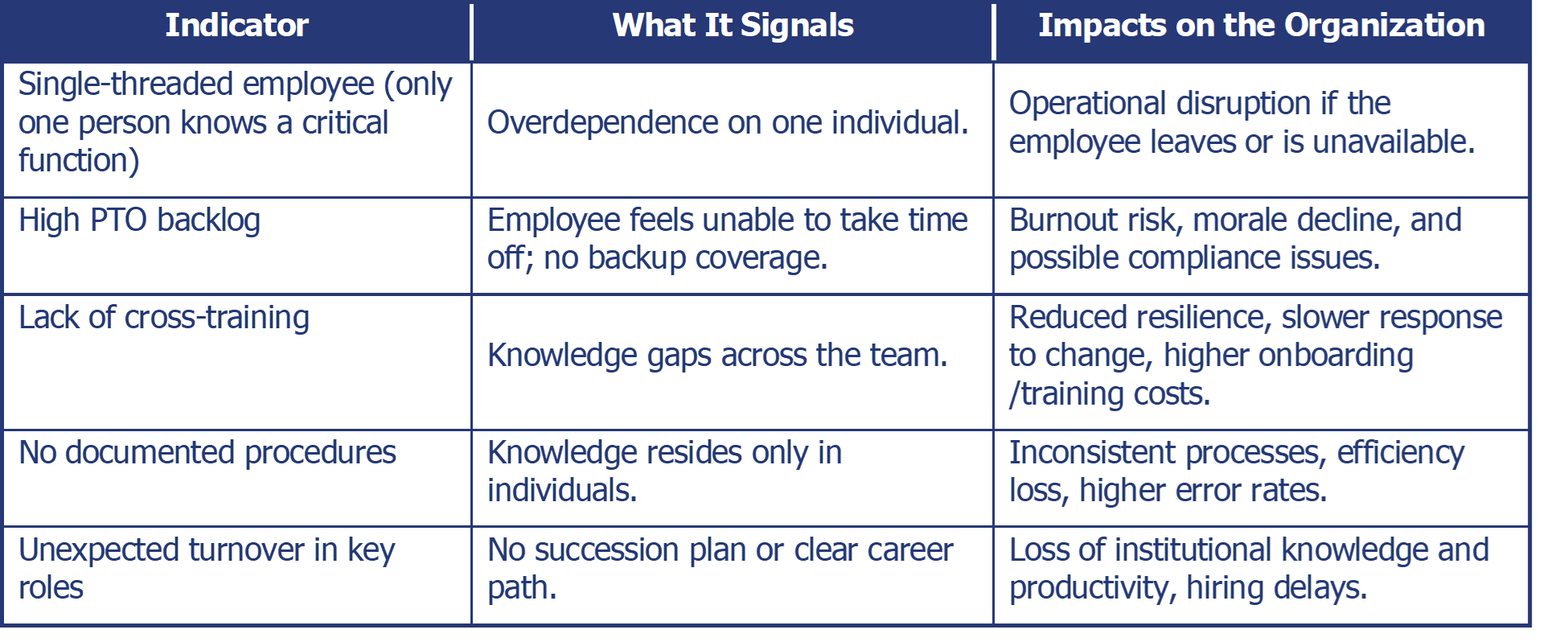
To better understand where organizational vulnerabilities may exist, the following table highlights key indicators of insufficient succession planning and their potential impacts.
Cross-Training: A Hallmark of Effective Management
Strong management includes establishing cross-training programs that distribute knowledge and responsibilities across the team. Cross-training offers numerous benefits:
- Higher employee value: Broader skills increase adaptability and capability
- Boost in morale: Demonstrates investment in employee development
- Improved retention: Growth opportunities reduce turnover
- Better wellness: Shared responsibilities reduce stress on overburdened staff
Cross-training signals that a company prioritizes employee development while strengthening its operational foundation.
The Broader Value of Succession Planning
Succession planning goes far beyond preparing the next generation of leaders. When implemented effectively, it:
- Strengthens organizational resilience
- Provides clear career paths for employees
- Decreases reliance on any single individual
- Enhances corporate health, sustainability, and competitiveness
A proactive approach ensures organizations are prepared for unexpected disruptions and well positioned for future success.
How Enterprise Iron Can Help
Enterprise Iron supports organizations in fortifying their operational health through strategic planning initiatives, including comprehensive succession planning. With deep industry expertise and a proven track record, we help clients:
- Identify vulnerabilities
- Develop effective cross-training strategies
- Implement long-term resilience frameworks
Beyond succession planning, our team advises on broader organizational health initiatives that align people, processes, and technology for sustainable growth. By partnering with Enterprise Iron, organizations can confidently prepare for the future, safeguard business continuity, and build a thriving, resilient workforce.
Reach out to us at info@enterpriseiron.comto explore how Enterprise Iron can help you mitigate risk, develop talent, and build long-term organizational strength.